OBJECT LABELS — THE COLLECTION
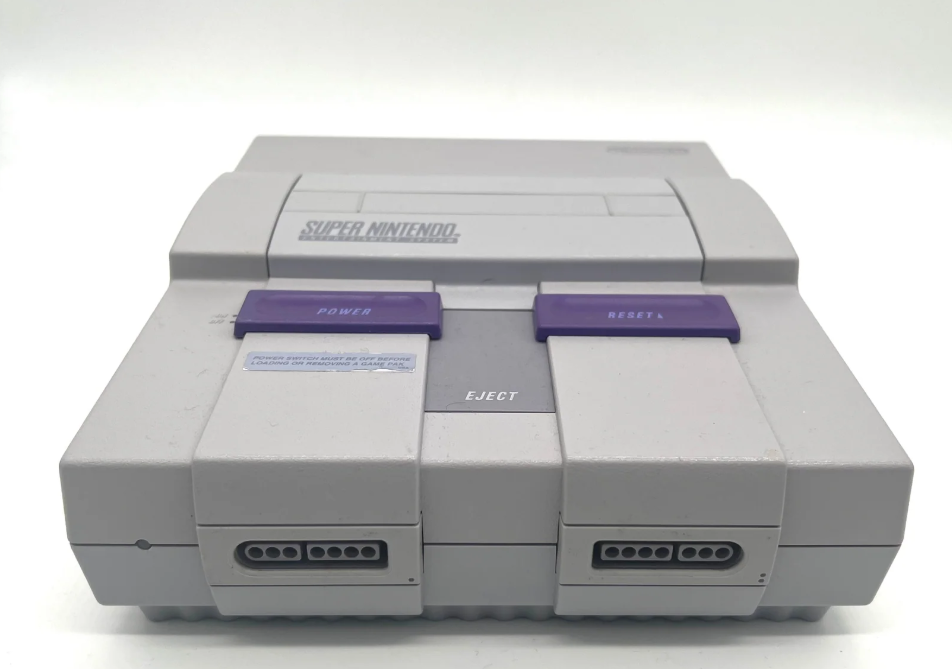
SUPER NINTENDO ENTERTAINMENT SYSTEM (SNES)
Nintendo Co., Ltd. — 1991 (NA)The SNES arrived in North America in August 1991 as the direct successor to the original Nintendo Entertainment System, which had revived the home gaming market following the crash of 1983. With its distinctive purple-grey casing and curved cartridge slot, the SNES became the defining object of early 1990s childhood for millions of American families. Its two-year head start over the PlayStation gave Nintendo the installed base to build one of the most beloved game libraries in history, spanning platformers, role-playing games, fighting titles, and sports simulations.
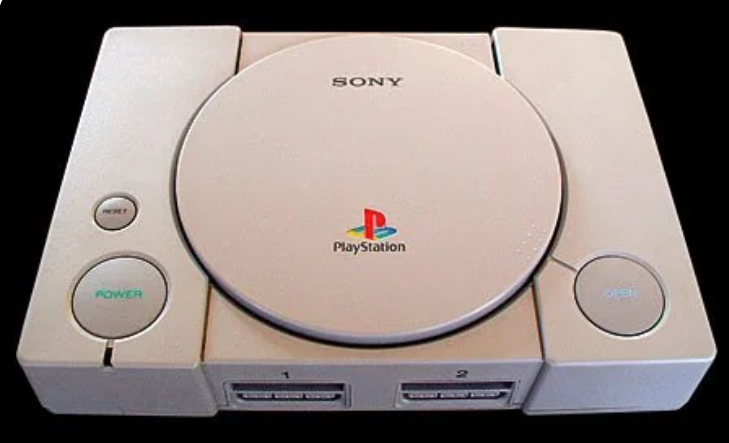
SONY PLAYSTATION (PS1) — MODEL SCPH-1001
Sony Computer Entertainment — 1995 (NA)The original PlayStation was an unlikely product of a failed partnership. Sony had initially worked with Nintendo to develop a CD-ROM add-on for the SNES, but the deal collapsed. Sony's leadership decided to build their own console instead — a decision that would make PlayStation the best-selling console of the 1990s. The PS1's grey rectangular body and CD-ROM drive made it look and feel fundamentally different from cartridge-based machines. Its launch lineup, including Ridge Racer, signaled a new era of gaming possibilities and attracted developers frustrated by Nintendo's strict licensing practices.
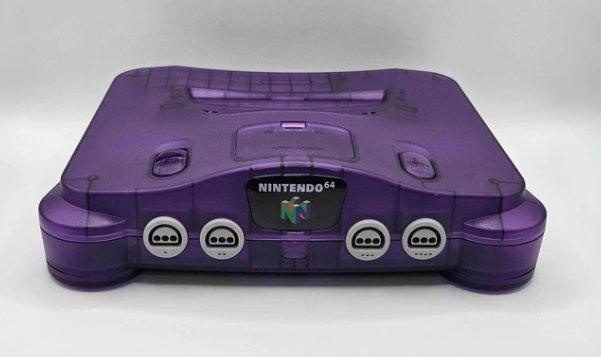
NINTENDO 64 (NUS-001)
Nintendo Co., Ltd. — 1996 (NA)The Nintendo 64 launched in North America in September 1996 at $199.99, arriving a full year after the PlayStation and riding the enormous anticipation surrounding Super Mario 64. Its 64-bit MIPS R4300i CPU and Reality Co-Processor — developed in partnership with Silicon Graphics — gave it raw 3D rendering power that technically exceeded the PlayStation in many respects. The N64 was the last major cartridge-based home console, a deliberate choice by Nintendo that kept load times instant but severely limited storage capacity and drove up game prices. This decision pushed several key third-party developers — most notably Square — toward the PlayStation, fundamentally reshaping the industry's power balance.
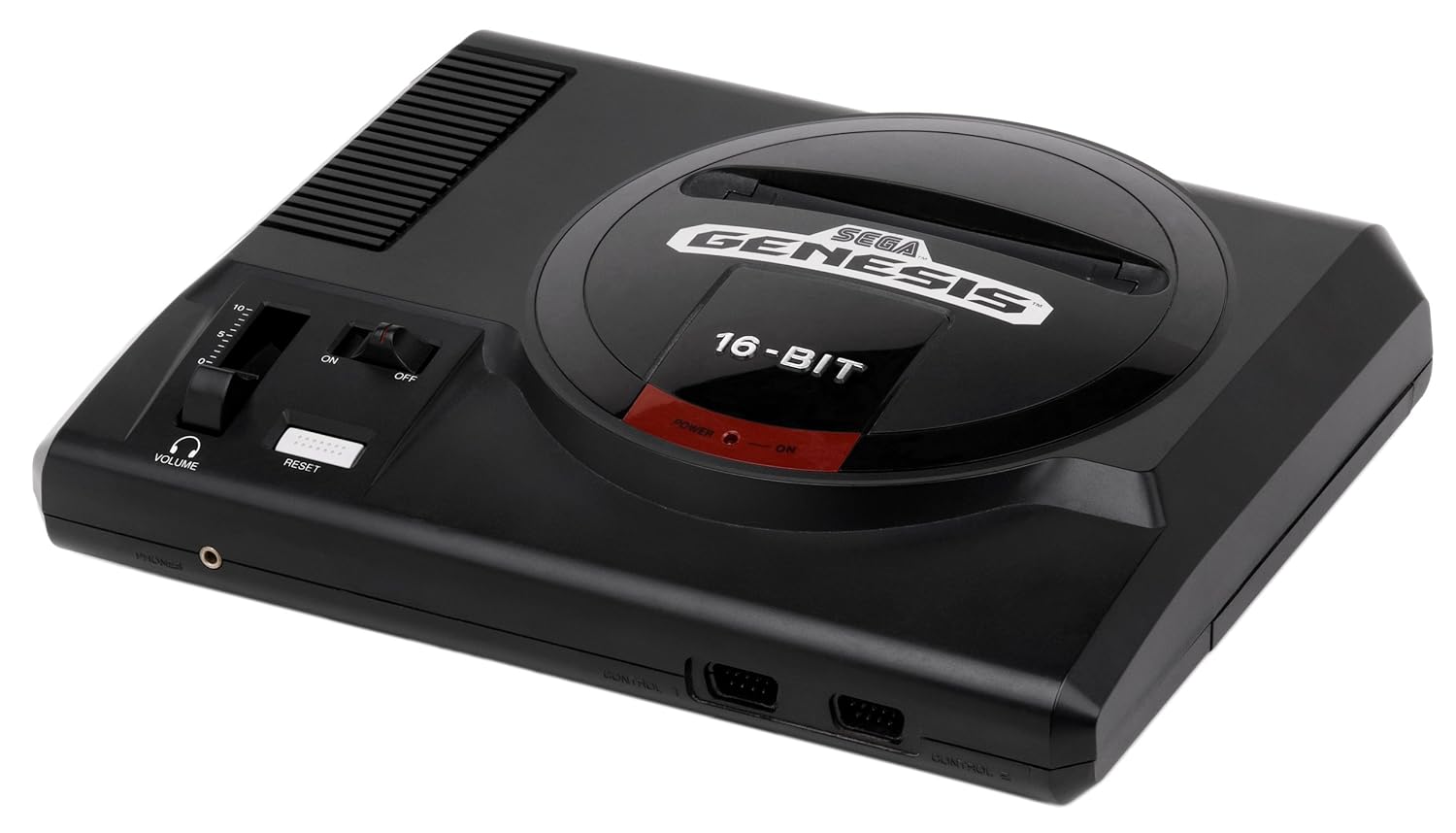
SEGA GENESIS (MODEL 1 — MK-1601)
Sega of America — 1989 (NA Launch)No honest account of the 1990s console era begins without the Sega Genesis. Launched in North America in 1989, the Genesis entered the decade as the SNES's primary rival and, for several years, its commercial equal. Sega's aggressive marketing — anchored by the slogan "Genesis does what Nintendon't" — positioned the console as the edgier, faster alternative for older players. At its peak in the early 1990s, the Genesis held nearly 55% of the 16-bit market in North America. Its Motorola 68000 CPU and distinctive FM sound chip gave the platform a sonic and visual identity quite different from the SNES.
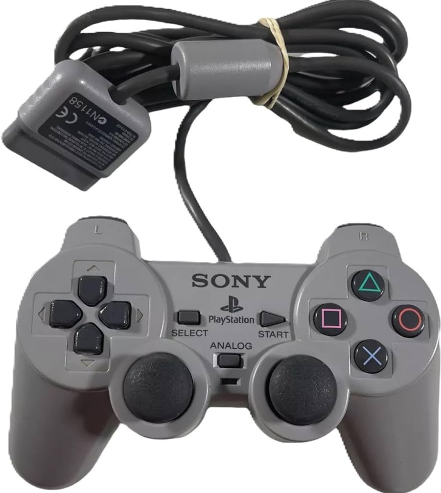
SONY DUALSHOCK CONTROLLER (SCPH-1200)
Sony Computer Entertainment — 1997Released in 1997 as an upgrade to the original PlayStation controller, the DualShock introduced dual analog thumbsticks and vibration feedback (rumble) to mainstream console gaming. The thumbsticks allowed players to navigate fully three-dimensional game worlds with precision that a D-pad alone could not provide. The rumble feature created a physical, tactile connection between player and game — a sword clash felt different from a car crash. The DualShock's wing-grip shape, analog sticks, and button layout became so influential that Sony's DualSense controller for the PlayStation 5 (2020) remains recognizably its descendant.
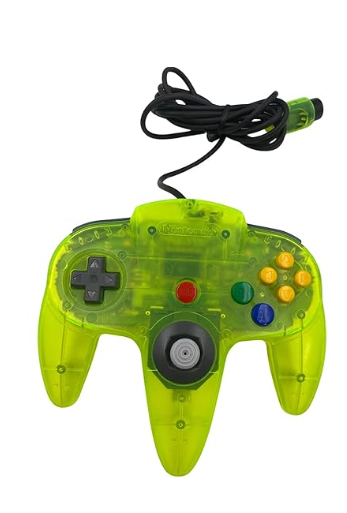
NINTENDO 64 CONTROLLER (NUS-005)
Nintendo Co., Ltd. — 1996The Nintendo 64 controller is one of the most divisive and historically significant gamepad designs ever produced. Its unusual three-pronged shape confused consumers at first glance but made sense in practice — the center prong housed the analog stick that allowed players to control Super Mario 64's movement in full three dimensions for the first time on a home console. The controller also featured a Z-trigger on the underside, a Rumble Pak expansion slot, and a C-button cluster for camera control. Its analog stick, while innovative, was notoriously prone to wearing down with heavy use — a flaw that became a running joke among dedicated players.
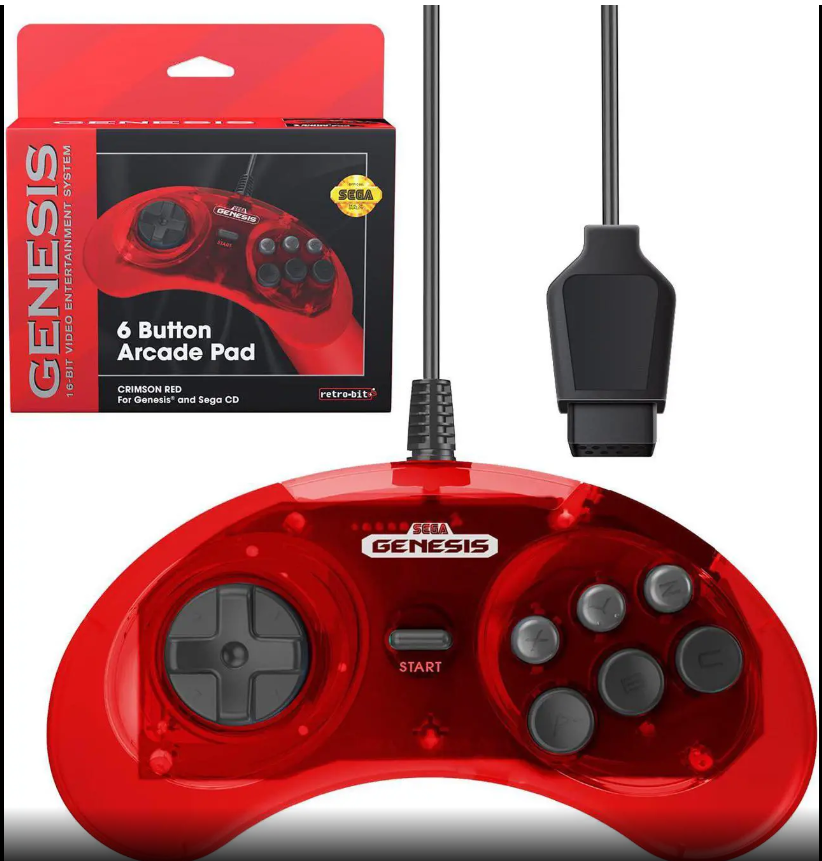
SEGA GENESIS 6-BUTTON CONTROLLER (MK-1653)
Sega of America — 1993The Sega Genesis launched in 1989 with a 3-button controller — A, B, C — which proved adequate for most games but became a serious limitation when Street Fighter II and Mortal Kombat arrived and demanded six face buttons. Sega responded in 1993 with the 6-button controller, adding X, Y, and Z buttons alongside a Mode button that toggled compatibility for older games. The 6-button pad's flat, rectangular design was more ergonomic than its predecessor and became the preferred controller for Genesis fighting game enthusiasts. The evolution from 3 to 6 buttons in a single console generation illustrates how rapidly player expectations were escalating during the console wars era.
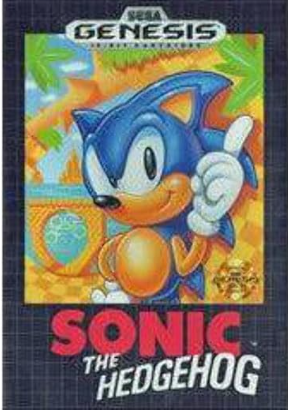
SONIC THE HEDGEHOG (MK-1009)
Sega — 1991 (NA)Sonic the Hedgehog arrived on the Genesis in June 1991 as Sega's direct answer to Super Mario Bros. — and it was anything but a copy. Where Mario emphasized exploration and precision, Sonic was built around speed, momentum, and attitude. Designed by Yuji Naka, Naoto Ohshima, and Hirokazu Yasuhara, Sonic used the Genesis's faster CPU to produce fluid, high-velocity scrolling that the SNES could not match without slowdown. The character's design — cool, impatient, irreverent — mirrored Sega's brand identity perfectly. Sonic sold over 15 million copies and became the Genesis pack-in title, giving Sega the mascot it needed to compete with Nintendo on equal cultural footing.
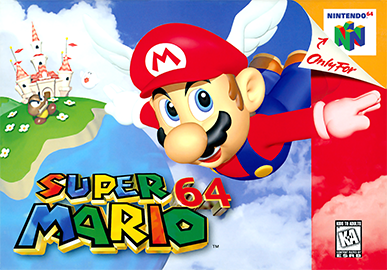
SUPER MARIO 64 (NUS-NSME)
Nintendo — 1996 (NA)Super Mario 64 is one of the most important games ever made — not merely a great game, but a foundational document of how three-dimensional gaming works. Released as the N64's launch title in 1996, it translated Mario's platforming vocabulary into full 3D with such precision and joy that it defined the grammar of 3D game design for the next two decades. Its 120-star structure, free-roaming levels, and analog stick controls set the template for virtually every 3D platformer that followed. The game sold over 11 million copies and remains one of the highest-rated games in history.
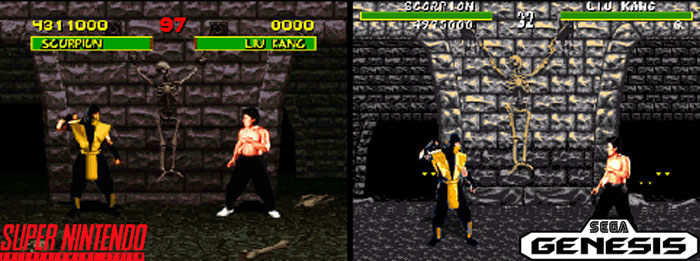
MORTAL KOMBAT (SHVC-AMKJ / MK-1079)
Acclaim Entertainment — 1993 (SNES & Genesis)Mortal Kombat's 1993 home console release became the flashpoint for the most significant political controversy in gaming history. The game's graphically violent finishing moves — called "Fatalities" — had been toned down in the SNES version while the Sega Genesis version retained the original content with a blood code. The difference drove a public debate about violence, children, and entertainment that reached the United States Senate. The congressional hearings that followed directly produced the ESRB rating system. Mortal Kombat is therefore not merely a game in this exhibit — it is a primary historical document of the moment that forced the gaming industry to confront its public responsibilities.